
Xue Jian: An Open Letter to Xi Jinping
Issue: Freedom of Expression
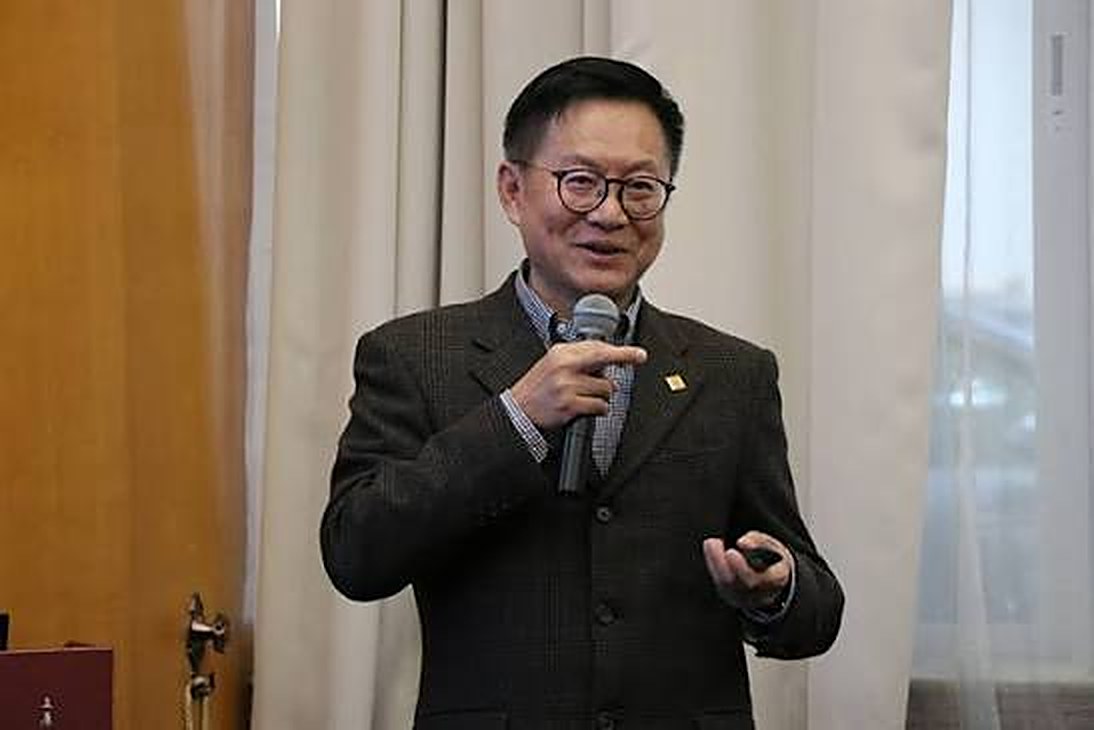
Xue Jian (file photo).
[Editor's introduction] Xue Jian is chairman of Jiangsu Wenfeng Group and the actual controller of Wenfeng Shares, an A-share listed company. This open letter to Xi Jinping was written in Tokyo in the early hours of November 21, 2026, and was published on November 26 by the X account 'Teacher Li Is Not Your Teacher,' drawing more than 1.15 million views within hours. The full text follows below, in English translation; the Chinese original is on this site's letter page, and our verified report is here.
Mr. Xi Jinping:
Hello!
The Different Fates of Two Generations
My name is Xue Jian. I was born on the twentieth day of the twelfth lunar month of 1989 — January 16, 1990 in the Gregorian calendar — into an ordinary small-town family in northern Jiangsu. I am now chairman of Jiangsu Wenfeng Group and the actual controller of Wenfeng Co., Ltd., its A-share listed company.
In 1999, our school started computer classes, and soon afterwards our town opened its first internet café.
That year, I registered my first QQ account, learned to play games online, and began chatting over the internet with people from all over the country.
That year, Macao returned to China. I still remember our teacher teaching us to sing: "Do you know that 'Macau' is not my real surname? I have been away from you too long, Mother!"
That year, I was nine years old.
Two years later, in 2001, China joined the WTO.
In 1962, your father Xi Zhongxun was purged, and from then on you and your family underwent enormous upheaval.
That year, you were also nine years old.
In 1966, because of your father, you were denounced and struggled against at school. At the time you asked your teacher why all this was happening.
That year, you were thirteen years old.
In 2003, I read online about the events of 1959–1962. At the time I did not believe that tens of millions of people had once starved to death in China, and I argued with people online about why they would rather starve at home than go out to find food. Later I confirmed from my elders, and from an older teacher at school, that it was true.
That year, the Shenzhou V manned spaceflight succeeded.
That year, I was also thirteen years old.
In 1968, again because of your father, you came close to being sent to a juvenile detention centre.
In 1969, you went down to the countryside at Liangjiahe. You were only fifteen that year.
I, at the same age, living in an open, tolerant and free era, spent every evening with my friends in internet cafés playing games, and obtained more and more information from the internet.
In that period I watched online the anti-Japanese war documentary An Inch of Mountains and Rivers, an Inch of Blood, and learned that the Nationalist army had suffered more than 3.2 million casualties in the War of Resistance — unlike the textbooks, which said it did not resist. Later, skipping school and classes became routine; because I was young and fond of play I moved through several middle schools, and in the end never went to university. At around twenty, I began starting businesses.
In 2018, I led the acquisition of Jiangsu Wenfeng Group and became the group's chairman.
On the day I took office, a colleague at the company told me:
"You are now the youngest head of any of China's top 500 private enterprises. Our company still ranks in the 400s."
I told him:
"From now on, never say that again, inside or outside the company. We will keep working hard and move toward the dream of the world's top 500."
What he did not know was that at that moment there was no joy in my heart at all — only fear.
That year, you amended the Constitution and at the same time pushed through the reform of the state supervision system; the Supervision Law formally came into force.
In 2018, friends around me began, one after another, to be placed in liuzhi detention. Each was held alone in a room for months or even longer, made to sit on a stool for eight hours a day without moving, and threatened that if they did not cooperate their families would be dealt with. Sometimes for a month, or even several months, no one spoke a single word to them; sometimes they were sent directly to a detention centre.
I saw from public information that you were denounced and struggled against at thirteen.
I do not know what fear you experienced then. But I, in 2018, deeply felt how fragile a person's fate is before enormous political power.
I recount here my own growing-up experience in a different era from yours in order to tell you:
We grew up in different eras. The generations of us who grew up after you face a different world from your generation, and we have different expectations of life.
You cannot demand that we live in the way you lived in the past, still less can you demand that the whole country return to before 1978.
That is unrealistic, and it is impossible.
From Hope to Disappointment
In 2014, I came to know Ren Zhiqiang.
At the time, I asked him:
"Will China in the future become a country that truly practises the rule of law, protects private property rights, and guarantees freedom? Will it carry out such a reform?"
He told me:
"It will. Because only then can this country enjoy long-term stability."
Later, we took part together in the public-interest environmental work of the Society of Entrepreneurs and Ecology (the Alxa SEE). He recommended me to join that public-interest institution; we worked together for many years, and I only withdrew from the association after going abroad. Though, compared with your grand stroke of the ten-year fishing ban on the Yangtze, what we did is hardly worth mentioning.
Once, I asked him:
"Wang Qishan's anti-corruption campaign — is it genuinely against corruption, or is it eliminating dissidents?"
He said:
"Of course it is genuinely against corruption. It is to save the people and the country."
I asked him again:
"Isn't he worried that one day, when the birds are gone, the bow will be put away — that he will be discarded?"
He said:
"He won't be."
That year, Wang Qishan had recommended a book about the French Revolution.
After I finished reading it, I asked Ren Zhiqiang:
"Isn't the view this book expresses precisely that those in power will not reform of their own accord?"
Ren Zhiqiang said to me:
"You don't understand. If there is no change, none of us has a way out."
In 2018, I talked with Ren Zhiqiang about Wang Qishan once again.
I asked him:
"Will Wang Qishan still be discarded when the birds are gone? Will he be arrested?"
This time, Ren Zhiqiang changed his answer.
He said:
"He might as well die of illness early, and be spared humiliation later."
In 2019, I received on WeChat an article by Ren Zhiqiang criticizing Wang Qishan.
In the article his wording was fierce: he accused Wang Qishan of betraying reform, betraying the people, betraying history — a historical criminal of the Chinese nation.
I asked him face to face:
"Have you shown this article to Wang Qishan?"
He said that ever since 2016, when he was disciplined over his "the Party media bear the Party's surname" remarks, Wang Qishan had no longer contacted him, and avoided meeting him.
They never met again, and had no contact of any kind.
But he said he had contacted Wang Qishan's secretary, Li Xiaohong, and asked him to pass the article on; whether Li passed it on was unclear.
The task force that handled Ren Zhiqiang's case that year has this article, and the matter can also be verified through Li.
In 2020, the epidemic began.
In that period Ren Zhiqiang wrote many articles; one of them criticized you.
I received it on WeChat too.
I asked him:
"Who else did you send it to?"
He said:
"I sent it to some friends."
Later still, he was arrested.
For a time I thought I would be arrested too.
Because another recipient of that article, a vice-chairman of the Alxa association named Dong Guoqiang, was arrested on economic charges over this matter, and was later heavily sentenced to ten years.
When I heard that Ren Zhiqiang had been heavily sentenced to eighteen years, and his son heavily sentenced to nine years, my heart collapsed. As I understand it, the task force promised that if he pleaded guilty his son would be released. The government should keep its word.
I thought: a "red second generation," sentenced to eighteen years merely for writing one critical article.
Then what do private entrepreneurs like us, from grassroots backgrounds with no backing at all, amount to?
From then on, I no longer had any business dreams.
I felt this enterprise could not be kept sooner or later.
I even felt that all my efforts in China were meaningless.
At the beginning of 2022, I was in Shanghai.
During the epidemic I was locked down at home and in the office, unable to go out normally for more than a month.
Every day I saw all kinds of news in the group chats. I saw a violinist with cancer who, in too much pain because he could not go to hospital for chemotherapy, jumped from a building to his death. I saw a sick nurse who, because she had no PCR report, could not enter the hospital where she herself worked for treatment, and lost her life. I saw a mother holding her child, weeping bitterly, knocking door to door along the street begging for cold medicine to save her child with a high fever.
At that moment, I understood why, in 1959–1962, so many people starved to death without leaving home: because they could not leave.
Shanghai normally has several thousand operations a day, and patients who regularly need chemotherapy, dialysis and other essential treatment. What happened in Shanghai in that half-year, and what happened across the country in those three years — you can imagine.
As a child I grew up listening to Ms. Peng Liyuan's "On the Fields of Hope." Grown up, under your rule, I lived instead in a wilderness of despair. The last trace of wishful thinking also vanished completely in that period.
That year, my father was diagnosed with terminal stomach cancer. Because of lockdowns everywhere, he could not be treated or operated on at all, and was forced to go to Japan for surgery, where his whole stomach was removed.
In April, I finally decided to leave China.
It was also that year that I heard accounts of your remarks at a Politburo meeting about regulating capital and private enterprise.
A friend told me that you named Li Ka-shing, Jack Ma and Xu Jiayin as three negative examples, and held that there is a fundamental divergence between China's private entrepreneurs and the original aspiration and mission of the Chinese Communist Party.
Hearing these accounts, we shuddered.
At that moment, I was even more certain that I could no longer return to live in that country at ease, as in the past.
My Own Experience and the Predicament of the Wenfeng Group
In 2023, the Zhejiang entrepreneur Mr. Zheng Yonggang died in Japan; his mourning hall was set up in Tokyo.
I posted a passage on my WeChat Moments.
I called on the government to stop arbitrarily arresting private entrepreneurs.
I said that people like us do not care all that much about how much wealth we personally own.
We hope the country becomes better.
I called on the government to return to the basic state policy of reform and opening, and to further promote reform of the political system.
Otherwise, everyone will in the end walk toward a bottomless abyss.
The day after I posted that Moments post, I received calls from company staff and local officials.
They told me that Cai Qi and Li Shulei had each issued instructions on this matter, passed down level by level to Jiangsu and Nantong. Afterwards, officials of the provincial Party committee's propaganda department led a team to the company.
The people at the company told me: for the company's sake, I must admit fault.
So I sent a passage admitting fault to my company colleagues on WeChat.
But on the third day, my WeChat Moments and group-chat functions were still banned.
At that moment, my heart was full of anger and humiliation.
I do not understand why an ordinary citizen expressing his concern for the country's future should encounter such a thing.
Later still, I invested overseas in developing decentralized social communications software; one of them is called Mosavi.
I hope that one day, no one will be able arbitrarily to ban my Moments, ban my accounts, and strip me of the right to express my views normally. I also hope that one day, no government will be able arbitrarily to ban an ordinary citizen's Moments or any ordinary citizen's account. All ordinary citizens should have the right to express their views normally.
In September 2024, Ren Zhiqiang's daughter told me she had been unable to visit her father for two months.
Before that, she had been able to visit him normally every month; I often chose books for her to take in.
She told me his prostate disease was very serious — he had to go to the toilet more than ten times a night — and that he also suffered from asthma.
Hearing this, I felt uneasy at heart.
So I posted on Moments, hoping the relevant departments would give Ren Zhiqiang the medical treatment he deserves, and allow him medical parole.
At the time, I wrote some very fierce words.
I said that if Ren Zhiqiang died in prison, I would certainly pursue responsibility against everyone involved in his case — to the ends of the earth, a blood debt repaid in blood.
My original intention was to hope he could receive treatment and be reunited with his family.
Later, his daughter also published an open letter to you.
Afterwards, the relevant departments began to investigate me.
From the beginning of 2025, the company also came under continuous investigation, while some of my former friends in China were, one after another, summoned for talks by different departments in different places.
By the end of 2025, after nearly a year of continuous investigation, the company's management were all living in fear and anxiety.
So we decided to sell to an outside buyer.
In addition, the enterprise itself had been operating with difficulty for years; the group's hotels and other heavy assets had been losing money since the epidemic and were hard to sell, while the company's daily operations cost money every day. We could only obtain funds by selling shares, to repay bank loans, interest, employees' wages and other daily expenses.
The first sale of 5% of the listed company's shares, after an agreement had been signed with the buyer, was blocked by the Jiangsu Securities Regulatory Bureau and forced to terminate.
At that time, the market value of the group's listed company, Wenfeng Co., Ltd., was RMB 5 billion. The company held nearly 900,000 square metres of commercial property in Shanghai and Jiangsu, with total assets of nearly RMB 6 billion, net assets of RMB 4 billion, RMB 1 billion in cash on account, and interest-bearing liabilities of only a few tens of millions.
After being blocked, the group reported and wrote to the Nantong municipal Party committee and government, explaining the company's assets and liabilities. We hoped the local government would coordinate with the Jiangsu Securities Regulatory Bureau and allow us to sell the shares in a market-based way.
The company stated clearly: all proceeds of the sale would be used to resolve the issues the securities regulators were concerned about and to repay financial institutions' loans. This would avoid losses to financial institutions, avoid employee unemployment, avoid the loss of tax sources, and let the enterprise operate normally, unaffected. All funds could enter a special supervised account; I myself would not take a single cent.
At the same time, I expressed the same view to the Jiangsu Securities Regulatory Bureau.
At that time, one buyer was willing to pay RMB 1.25 billion to purchase the 20% controlling stake the group held in the listed company.
But after the letter to the local government, a deputy secretary-general of the Nantong municipal Party committee told me by telephone: they did not welcome this buyer.
With no other choice, the company approached another buyer from Shenzhen who brought chip-industry resources; they offered RMB 950 million for the 20% controlling stake. I thought the relevant departments would accept.
But in this very process, from December 2025 to April 2026, the company continuously encountered obstruction and handling from the Jiangsu Securities Regulatory Bureau.
While blocking the sale, the Jiangsu Securities Regulatory Bureau repeatedly summoned and pressured the accounting firm to issue a non-standard audit opinion on the company. At the end of April the company was placed under ST risk warning, and the share price began to fall.
The company explained the situation to the territorial government again, but the Jiangsu Securities Regulatory Bureau still did not agree.
What other operating mechanism lay behind this, I do not know.
In short: we were not allowed to sell.
At the end of April, the buyer changed the terms, asking to buy 15% of the shares and obtain control for RMB 750 million. We signed the transaction agreement. The other side paid part of the money, and the Shanghai Stock Exchange also disclosed the sale announcement.
That very day, the Jiangsu Securities Regulatory Bureau expressly put its opinion to the Shanghai Stock Exchange demanding that the sale be stopped, and the transaction was again forced to terminate.
I had already informed the local government, the Jiangsu Securities Regulatory Bureau and the Shanghai Stock Exchange that if they used administrative means to prohibit the company from selling, it would cause the enterprise to blow up and go bankrupt, and that I would write an open letter to Xi Jinping.
Afterwards, the company's share price fell continuously. The listed company's market value dropped from about RMB 5 billion to less than RMB 2 billion today. The relevant financial institutions began to sue.
From July, the company also entered a further case-filing investigation procedure. To this day, the company remains under investigation, and the sale of shares is also restricted.
I cannot understand why such administrative means are used to push, step by step, an enterprise with RMB 10 billion in assets and nearly ten thousand jobs toward blow-up and bankruptcy liquidation. Because the money from selling the shares was, in the first place, to be used to repay loans from state-owned financial institutions. Under the present circumstances, the company will be forced into bankruptcy liquidation and judicial auction procedures.
Who, in the end, does this way of doing things benefit?
Those harmed are the state-owned financial institutions.
Those affected are employees' jobs and local tax revenue. In the end someone may obtain the company cheaply through a court auction — but that is not merely robbing money from my hands; it is also robbing money from the banks, from the state treasury.
I believe this way of handling things is wrong, and inappropriate.
Even if the relevant departments need to deal with me personally, they should not harm the whole enterprise and harm ordinary employees; they are innocent. Whatever I have said or done overseas, they simply do not know. Nor can they decide my personal words and actions. Moreover, I have already lived overseas for nearly five years.
I hope you can ask the relevant departments or the territorial government to handle the Wenfeng Group's affairs properly, in accordance with the law. If you are willing to intervene, I also beg you not to blame any official who has handled this matter; I only hope the company's affairs can be handled properly.
I was born into an ordinary family and grew up in the era of reform and opening.
For that era, which once gave ordinary people the chance to change their fate, I remain ever grateful. I can accept all my assets in China being reduced to zero, and the account settled there. But I cannot accept the relevant departments using administrative means to blow up the enterprise, leaving it insolvent and implicating others.
Please Let Ren Zhiqiang Receive the Treatment He Deserves
I also ask you once again to allow Ren Zhiqiang medical parole.
Recently, Ren Zhiqiang's daughter told me that lately her father sometimes finds even speaking on the telephone a strain. His physical condition is very unstable, now better, now worse.
Mr. Xi Jinping, you too are a man with a daughter.
Please put yourself in his place and think.
Ren Zhiqiang wrote one article and criticized you in a few sentences.
The price he has paid for this is already great enough.
As a bystander, I read that article criticizing you several times over and found nothing special in it; the next day I could not even remember its contents.
I beg you once again: give him the opportunity of medical parole, let him receive treatment and be reunited with his family.
If this can be done, we will remember this kindness, and if there is an opportunity in the future we will certainly repay it.
The Risks China's Economy Is Facing
Next, I would like to talk with you about China's present economic situation.
First, the external side. Since 2024, the United States has carried out several rounds of tariff adjustments on Chinese goods.
Meanwhile, essential imports — energy, semiconductors, raw materials, agricultural products — require spending more dollars. In the past, China was able, through trade with countries such as Iran and Venezuela, to import energy using renminbi.
Now exports and imports are under pressure at both ends.
Of course, the official export data are very hot; as far as I know, the data do not match the real situation. You need only ask the central bank whether the usable foreign exchange at this moment has increased or decreased compared with the same period last year.
Since the beginning of this year, China's refined oil prices have risen several times; gasoline and diesel prices have risen cumulatively by more than 20%.
Recently, a dangerous situation of tight diesel supply has already appeared in various places.
Reuters has reported several times this year that the average operating rate of Shandong's local refineries is only 50%, with crude oil supply in serious shortage.
But crude oil supply on the international market is stable. Where has the problem arisen?
According to people in the industry, China may face an extremely serious energy-supply problem within the coming year.
Turning to the internal side: property prices across the country have fallen by about 50% from their peak; the total value has shrunk by roughly RMB 200 trillion.
One can imagine what consequences this will bring to the whole financial system.
Then employment and social security.
The officially published scale of the employed population was 725 million in 2025.
In the first quarter of this year, the officially disclosed population in flexible employment already reached 320 million. Following the current economic trend, in reality it may already have broken through 400 million.
Many of these people are in essence no different from the unemployed and semi-unemployed. If one only looks at the officially published surveyed urban unemployment rate, it fundamentally cannot reflect China's real employment.
According to Gelonghui's data, over the next ten-odd years, on average about 63,000 people will retire every day. On the other hand, large numbers of people are now stopping their social-insurance contributions every day. On one side, more and more people are drawing pensions; on the other, fewer and fewer people keep contributing.
Since the beginning of this year, scattered information online shows that in the Northeast, and even in Shandong, pensions have failed to be paid on time.
Recently, the human-resources and social-security departments have also begun to strengthen the collection of social-insurance contributions from people in flexible employment; some places have even seen the recovery of past social-insurance arrears. Yet against the enormous social-security funding gap, this is only a drop in the ocean.
More serious still, the household debt problem is also continuously worsening.
Bloomberg disclosed that at the beginning of this year the number of people involved in personal loan defaults exceeded 120 million — but friends in the financial industry say it is far more than that.
Then local finance.
The central finances and the local finances of all 31 provincial-level regions are in deficit. If all the local hidden debts of every kind are counted in, the real situation is far more serious than the published statements reflect.
Even in places like Jiangsu, Zhejiang and Shanghai, whose fiscal strength was comparatively strong in the past, fiscal strain has appeared, with some districts and counties having difficulty paying civil servants' wages. Some counties in northern Jiangsu, whose economies are not as strong as southern Jiangsu's, have even, where the original financing channels were insufficient, raised funds from the public at high interest rates of 12%–15% to protect civil servants' wages; one such county alone has several tens of billions of this high-interest fundraising.
Hospitals, schools and grassroots public institutions across the country are commonly in arrears on wages. China's local finances have fallen into a very serious predicament, and the situation is still deteriorating.
Finance, investment, consumption, real estate, employment, the financial sector and industrial production all have serious problems of varying degrees.
I also have doubts about the real situation of the export data.
China's economy is facing a situation in which multiple organ failures are superimposed on one another.
In private exchanges with some entrepreneur friends and economists, we are all increasingly worried that China's economy is approaching the critical point of a systemic crisis, and that a brittle fracture will occur within about the coming year.
Of course, exactly when it happens, and in what form, only God knows.
If the private economy and the real economy continue to shrink, and market entities keep decreasing, the whole system will become harder and harder to sustain. I appeal to you once again: please, governments at every level, stop placing private entrepreneurs in liuzhi detention and arresting them. The private economy is the ballast stone of stable social employment, and a benign force for society's peaceful transition.
In addition, if local governments keep obtaining financing from the banking system through local state-owned enterprises and urban-investment platforms to keep operating, the risk will in the end crush the financial institutions. And behind the banking system stand the deposits of countless ordinary people and the credit of the whole country.
Local state-owned enterprises like Zhuhai Huafa and Shenzhen Vanke — there are many more across the country. If a serious debt default really occurs, on the surface it looks like only Guangdong's problem.
But can the central government stand aside?
If places everywhere reach the point of explosion, the central government not only cannot stay out of it — by the time it wants to deal with it, it will already be too late.
Of course, my knowledge is very shallow.
I suggest you convene a few people who truly understand economics, finance and banking, and seriously hold a meeting.
But you must require the Ministry of Finance, the financial regulatory departments and the relevant institutions to bring together the real fiscal situation of every place, the fiscal gaps, the debts of local state-owned enterprises, the hidden debts, the real bad loans of financial institutions, and the foreign exchange the central bank can actually deploy — all of it.
Let them judge, from the real data, if things continue as they are, at what point the whole economic system will face a serious systemic risk.
If their conclusion differs from what you are hearing now, or is even close to my worries, then I hope you will seriously consider the following proposal.
A Proposal for a Peaceful Transition
I propose that you take the lead, and under the authorization of the Central Committee establish a National Emergency Committee, to promote a peaceful transition.
First, make public to society, as completely as possible, the state's real fiscal ledgers, local debts, state-owned enterprises' debts, financial institutions' risks, and the economic pressure the country currently faces.
Let the citizens know in what state our country actually is.
Then, let this committee, within a clear time limit, promote the drafting of a new constitution and return power to the people.
This committee may set a transition period of one to two years. During the transition, you would no longer hold the principal leadership posts of the Party and the state, and would hand Party and government power over to the National Emergency Committee. This is not out of offence or challenge to you, but so that all sectors of society truly believe in the sincerity of the peaceful transition.
But out of consideration for your personal safety, during the transition you may continue to serve as Chairman of the Central Military Commission, for a term the same as the National Emergency Committee's. From the day the new constitution comes into force, the military would simultaneously be handed over to operate under the new constitutional framework.
In this way, you too can feel at ease.
The new constitution should genuinely guarantee private property rights, establish the rule of law, guarantee citizens' freedom, open up the ban on political parties, and let the state's power return to the people's hands.
The new constitution should be given to all citizens for public discussion and full deliberation.
At the same time, special protection clauses should be added to the new constitution.
In view of the fact that you, and the Central Committee under your leadership, voluntarily return power to the people and voluntarily hand power over to the new constitutional system, bringing about the country's peaceful transition, clear security guarantees should be provided for you, your family, and the members of the Central Committee.
Through a special amnesty clause, legal responsibility for things that occurred during the past tenure would no longer be pursued.
Of course, the specific scope and procedures of the amnesty, and how to take into account other victims' lawful rights and judicial fairness, need to be further discussed by all sectors of society and determined through lawful procedures.
At the same time, in the new constitution and the transition arrangements, the lawful employment rights of the existing more than seven million civil servants must also be guaranteed. Political-system change must not cause these ordinary civil servants suddenly to lose their jobs and their sources of livelihood.
Of course, the unjust, false and wrongly decided cases of these years, and those who took part in manufacturing them, should be investigated and dealt with in accordance with the law.
But all investigations and accountability must proceed on the track of the rule of law.
Suppose the National Emergency Committee is composed of seven members.
Four of them would be people you trust, designated by you.
For example, Cai Qi, Wang Xiaohong, Li Qiang, Peng Liyuan and others.
The other three would be recommended by civil society.
For example, Ren Zhiqiang, Jimmy Lai, or Ms. Liu Xia, the widow of Mr. Liu Xiaobo — people with social influence.
Of course, these are only examples I name offhand; they do not mean those people are themselves willing to take part.
Exactly who should compose it, you can think over carefully.
I put forward this proposal not because I believe everything that happened in the past was right.
But because I hope this country can realize a peaceful transition of its system at the smallest possible cost.
Let everyone be able to see a peaceful future.
So that the new constitution and the special protection clauses can form a broad consensus, all sectors of society can be invited to sign jointly and publicly declare support for and guarantee of this peaceful transition arrangement.
Including entrepreneurs, intellectuals and other public figures at home and abroad.
Including overseas Hong Kong compatriots, the students of the '89 generation, Falun Gong practitioners and all dissenting groups — as long as they recognize the new constitution and the special clauses, they are welcome.
Welcome them to return to their hometowns, to give play to their ambitions, to build the ideal country in their hearts, and let every Chinese person pursue, in their own way, the Chinese dream that belongs to them.
Great China should have a breadth of mind and magnanimity sufficient to let them gallop and soar.
One may even invite the United Nations and the relevant countries, on the premise of respecting China's sovereignty and the Chinese people's autonomous decision of the country's future, to provide appropriate international support and witness for the peaceful transition.
All of this is only my personal preliminary thinking.
I know it is very immature, with many places needing discussion and improvement.
I speak out what I have seen and what I worry about, and the ideas and proposals I believe can let the country realize a peaceful transition at the smallest cost. Even if you were willing right now, I believe this plan's chance of success is growing smaller and smaller — now only 30% remains, and the time window is very tight.
But I hope you will think it over seriously.
I hope that one day I can see you and your family go to Europe to watch the World Cup, and travel around the world.
I hope that one day your daughter can share, on social media, happy moments of you with a grandson or granddaughter.
I hope that one day your wife, Ms. Peng Liyuan, can hold a concert.
We can also buy tickets to hear her sing.
And you can bring old friends along to support your wife.
We sit in the same theatre.
With no fear in one another's hearts.
I even hope that one day, in a restaurant on some street corner, or in some park, I may meet you by chance.
We can sit down and have a drink together.
Talk about the differences between one generation and another, and about the differences between the first Godfather and the second Godfather that you like.
I hope the you I meet at that time is a kind and amiable old man — not the Xi Jinping of today, at whose name everyone feels fear.
I hope that one day, none of us will live in fear any longer.
Mr. Xi Jinping, if you feel anxiety and unease, I suggest you try talking with God in your heart.
No special form is needed, and no ceremony.
Whatever you think in your heart, whatever you worry about, whatever you hope to obtain — you can try pouring it out to God.
If your thoughts and wishes are good, I believe God will hear your prayer.
In these years, I have been angry, and I have suffered.
Because of what happened to me, my friends and my enterprise, I once thought of taking revenge on those who harmed me.
But today, I am willing to tell you:
I choose to forgive and pardon those who harmed me.
I do not wish hatred to continue.
I do not wish our next generation to experience again the fear our generation has experienced.
I will pray to God, asking Him to protect Mr. Ren Zhiqiang's health. Have mercy on him, let him receive the treatment he deserves, and be reunited with his family soon.
Mr. Xi Jinping, I also pray for you.
I pray that God gives you love and mercy, and gives you spiritual wisdom.
Let you see this country's true situation, see the suffering of ordinary people, and see the road of peace and justice, and help you make the correct historical choice.
Xue Jian
In the early hours of November 21, 2026, in Tokyo
[About this document] The letter is dated November 21, 2026 and was first published on X ('Teacher Li Is Not Your Teacher,' November 26, 2026). If the author or his family have any comment on this republication, please contact [email protected] and we will act immediately. The English translation is by Freedom China.
Source: Original publication: 'Teacher Li Is Not Your Teacher' (X), November 26, 2026。