
Ren Zhiqiang: The 2020 Essay on Xi Jinping's Speech (Full Text)
Issue: Freedom of Expression
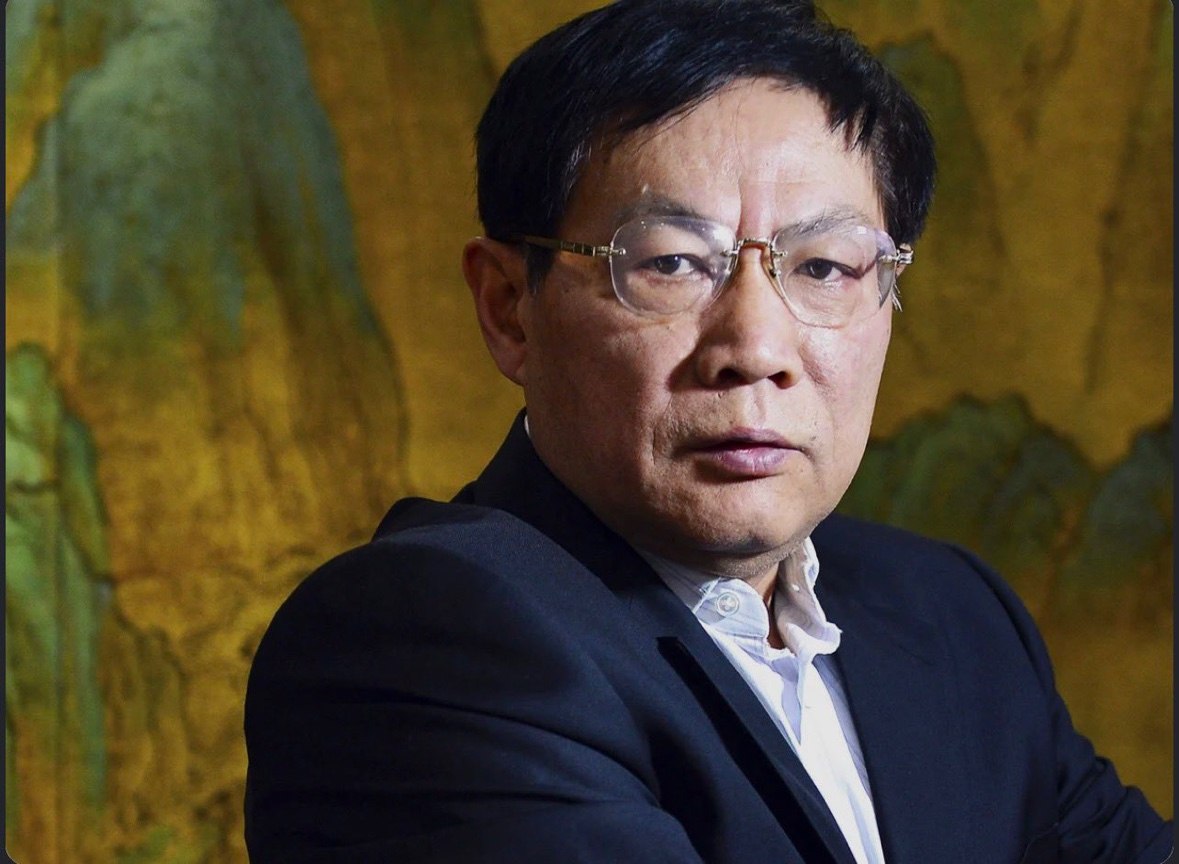
Ren Zhiqiang (file photo).
[Editor's introduction] Ren Zhiqiang is the former chairman of Huayuan Property. This untitled essay circulated online in early March 2020, commenting paragraph by paragraph on Xi Jinping's February 23, 2020 speech to a nationwide epidemic-control conference and criticizing the concealment of the outbreak and the suppression of speech. The South China Morning Post verified that Ren wrote it. Ren was taken away in March 2020 and that September was sentenced to eighteen years on corruption charges; the essay is widely regarded as the real reason for his punishment. The full text follows below, in English translation; the Chinese original is on this site's essay page; his case file is here.
On February 18 I finished writing "Memory and Reflection" and meant to put down my pen for good — above all, I did not want to touch the scar of February 19 again.
On February 19 four years ago, I reposted a Weibo photograph of "CCTV's surname is the Party," adding the comment: "When all the media have taken a surname, and no longer represent the interests of the people, the people are abandoned in a forgotten corner." That set off a "ten-day Cultural Revolution"-style denunciation campaign across the whole internet, and a Party disciplinary punishment of one year's probation within the Party! So every year on February 19 I resolutely lay down my pen, to guard the memory of that day.
But this outbreak of the Wuhan pneumonia epidemic in China has precisely confirmed the reality that when "the media all bear the Party's surname," "the people are abandoned." With no media representing the people's interests to announce the truth of the facts, what remains is the result: people's lives harmed jointly by the virus and by the grave sickness of the system.
A few days later, the media and the internet were full of the news that on February 23 the central authorities had convened a meeting attended by some 170,000 people across the country — called the largest central meeting in Chinese history by number of participants. Far exceeding in scale the Lushan Conference of seven thousand in its day, it is said to carry a practical significance even greater than the Seven Thousand Cadres Conference, and to have been a great meeting.
Many people online have been using every means to brag about and flatter the great significance of this meeting, emphasizing in particular that the most important thing in it — the Party General Secretary's long speech — was an inspiring, wise and correct strategic deployment that pointed the way for the world in preventing and controlling the epidemic, calling for the strength of the whole-nation system to meet the great test, defeat the epidemic, and win a great victory for the socialist system with Chinese characteristics. It "showed" that the Party Central Committee's judgment of the epidemic situation was correct, and "demonstrated the marked superiority of the leadership of the Chinese Communist Party and of the socialist system with Chinese characteristics."
For a time, the whole country was cheering for the great leader's speech, as if China had once again entered that once-great era of the Great Leap Forward — an era of red flags flying everywhere, of the Little Red Book held high, of threefold cries of "Long live, long live, long long live" to the leader. Many more people were explaining, from every angle, the essence they had discovered in the February 23 speech, believing that China had entered a new era.
I too, out of curiosity, studied this speech carefully. But what I saw in it was the complete opposite of the "greatness" reported by the news media and online. Standing there was not an emperor displaying his "new clothes," but a clown who, stripped naked, still insists on being emperor. Though he holds up one fig leaf after another to try to cover the reality that he is wearing no clothes at all, he does nothing to hide his ambition to be emperor at all costs — and his resolve that whoever will not let him be emperor shall perish!
The speech is divided into parts one, two, three, four and a conclusion. I shall do the same: one, two, three, four and a conclusion!
I. The first part is "On the epidemic prevention and control work of the previous period"
This part is about commending his own great achievements, including the instruction of January 7. "Personally in command, personally directing" requires correct strategy; it relies on unified leadership, unified command and unified action, on the whole-nation system's supply of medical materials and daily necessities, on maintaining social stability and preventing social disorder, and on strengthening propaganda, education and the guidance of public opinion. In short, all of it is major achievement personally decided, with "enormous political courage," and personally commanded by the One.
Online there is an expert named Li Jin, who has published many books on state-enterprise policy and is praised by the media as "China's number-one interpreter of state-enterprise policy and news." He specially wrote a long article, "The Anti-Epidemic Historical Legend of the '170,000-Person Meeting,'" placing the historical "Seven Thousand Cadres Conference" and the "170,000-Person Meeting" side by side as unprecedented events in Party history that will surely be recorded in the annals. His flattery of this meeting has reached the utmost of shamelessness!
The "Seven Thousand Cadres Conference" in Chinese history can be called a crisis of the Party in power, and it put forward the message of "not fearing criticism, daring to accept criticism, daring to criticize oneself." It criticized and investigated the truth about "opposing right deviation," the Great Leap Forward, and the concealment of production and of reports, and in the end Liu Shaoqi, with the "three-seven" split, acknowledged the error of seven parts man-made disaster. Mao finally made a self-examination at the conference: "For all errors committed by the Centre, I am directly responsible, and indirectly I also have a share, because I am Chairman of the Centre. It is not that I want others to shirk responsibility — other comrades also bear responsibility — but the first to be responsible should be me." At the same time he made a self-criticism, and afterwards some rehabilitation work was done. Only then was the crisis weathered.
This meeting, too, perhaps faces a crisis of the Party in power. But people saw no critical opinions at the meeting, no investigation or disclosure of the truth of the facts, no clarifying of the cause of the epidemic's outbreak, and still less anyone examining or bearing responsibility. Instead it tries to use all kinds of great achievements to cover up the truth of the facts — as if this epidemic only began with the instruction of January 7. Then what happened last December? Why was information not released in time? Why was there the January 1 CCTV news pursuing eight rumour-mongers? Why was there the reprimand of January 3? Why was epidemic information reported to the United States on January 3? Why is there no mention of the various crises that occurred before January 7? Why was the January 7 instruction not made public to society? To this day it has not been made public! Why, after January 7, were all kinds of mass-gathering national meetings still held? Why go abroad on visits? Why beat drums in Yunnan to celebrate the Spring Festival? …
All of this uses only January 7 and January 20 in an attempt to cut off the nation's and society's pursuit of the causes of the epidemic's occurrence and spread. No longer mentioning why the epidemic was not announced in time and so on — this is precisely because those who hold power do not want to bear any responsibility, and refuse to let society pursue those responsibilities. They only want to use great achievements to cover their shame, while mobilizing all the media the Party controls — through so-called propaganda, education and guidance of public opinion, standardizing and perfecting information-release mechanisms, publicizing the Party Central Committee's decisions and deployments, moving and touching stories, guiding the positive energy of public opinion and such means — to resolutely stop all speech that pursues the truth of the facts. Resolutely stop speech that pursues responsibility for causing this epidemic; resolutely refuse to admit the role of the whistleblowers; refuse to admit the fact of the system's and the decision-making's incompetence!
But this fig-leaf propaganda can probably only deceive those who are willing to be deceived by you; it cannot deceive those who believe only in facts and truth. Whatever great achievements the present prevention and control may have won, they cannot restore the lives that were lost, the festivals that lost their joy, or the families broken by the loss of their loved ones. Nor can they restore the major economic losses caused by the epidemic, or families' pursuit of a happy life!
The whole speech never mentions the cause of the epidemic, never mentions the cause of its expansion out of control; the whole society never saw the situation of "early detection, early reporting, early isolation, early treatment." At the same time it does not mention the ills under the Party's unified leadership system; does not mention who should bear responsibility for the epidemic's expansion; still less will it examine the causes of and responsibility for the various problems that have appeared since last December. The emperors of history at least had their "edicts of self-reproach"; the Seven Thousand Cadres Conference at least had examination, self-criticism and admission of error. But this great meeting of "170,000 people" has only praise and merit — no causes, no truth, no responsibility.
What kind of "Seven Thousand Cadres Conference" is this? This can only be the waving reception of the Red Guards atop Tiananmen!
Self-commendation that does not mention causes, truth or responsibility is all "firing the cannon after the horse" — hindsight that even a fool knows. Great and wise, correct strategy should all have been work to prevent the epidemic from occurring and expanding, but all of it happened after Professor Zhong's grave warning, not before Professor Zhong cried out. And this dares to call itself wise? Dares to boast of itself as achievement? Dares to boast that it "promptly formulated and fired the first shot of the people's war of epidemic prevention and control"? Clearly these were all kinds of rescue that had to be carried out after the fact — patching leaks and plugging holes — yet they are blown up into "when it is time to strike, strike one must." Truly, they do not know that the world still contains the word "shameless"!
An emperor can deceive himself that he is wearing clothes, but even children know the emperor is bare-bottomed; those who dare not say the emperor wears no clothes all know what wearing new clothes is, and what wearing no clothes is. When Ceaușescu thought the people would still believe his lies and deception, he did not know the ship had already turned around!
II. On the current priorities in strengthening epidemic prevention and control
The core of this part of the speech is probably "resolutely stopping, in accordance with the law, public opinion that takes the opportunity to launch malicious attacks"!
The deployment of epidemic prevention and control is telling society that at present the whole Party and the whole country are incorporated into one body — all in the same boat. It devolves the causes of and responsibility for the epidemic onto the heads of governments at every level, and tells the whole Party and society that they must unite as one and work together to win victory. All achievements won are led by me; without me, none of you would amount to anything. If complete victory cannot be won, then if I die, the Chinese Communist Party dies; if the Chinese Communist Party dies, China dies too!
Therefore Hubei must be held, Wuhan must be held, Beijing must be held; the whole-nation system must support the heavily stricken areas, and social stability must be earnestly maintained. In particular, the priority of prevention and control must raise the effectiveness of news and public-opinion work. Let the whole country's people know that to do prevention and control well, it cannot be done without me, without the Party, without unified command, and without everyone's joint effort to safeguard the core.
The tradition of imperial-power consciousness is that the state is the ruler's world, and ministers live by the ruler's command — hence the same boat and the same fate. Without the ruler there is no state, and without the state there is no status or power for ministers. Therefore it can only be the same boat and the same fate: first jointly preserve this boat, preserve this ruler, and only then can ministers and people be preserved.
In a modern state, where the people are the masters of the world, there is no such concept of the same boat and the same fate, nor is everyone bound to the same fate as the ruling party and its leader. In a democratic state, the democratic system can choose who is to be captain, and can also dismiss and replace the captain. Likewise it can replace not only the captain but the first mates and sailors of the entire management system.
Modern China is the same: it can do without the One, and it can do without a ruling party, but it absolutely cannot do without guarantees of the people's rights and interests.
The reality visible in this epidemic is that the Party is safeguarding the Party's interests, officials are safeguarding officials' interests, and the ruler is only safeguarding the core position and interests of the One. It is precisely this system that produced the situation of listening only to the ruler's command and disregarding the people's circumstances. When the epidemic had already occurred, they did not dare, without the ruler's order, to announce the epidemic to the public. They did not dare announce the facts and the truth, and instead used arrests of "rumour-mongers" to restrict and prevent the spread of the truth — and that is what caused the uncontrollable transmission.
At this moment, not everyone is standing in the same boat; each is strictly guarding his own interests, while the people of the country are abandoned behind. But when the epidemic developed out of control, the emperor turned into the wise commander and deployer, and the whole Party and the whole country were bound onto the boat of this command and deployment, becoming people who must and can only bear responsibility for the emperor. The emperor can arbitrarily replace any minister who will not devote himself to safeguarding imperial power, and can also use the same-boat-same-fate method to demand that everyone fight this defensive war well for the Party's interests, and meet this great test.
If there had been no error in the orders from above, whence would come the crisis and the great test? Since the Party Central Committee had already made an accurate judgment of the epidemic situation, since personal command had already taken forceful and effective measures, since all the work deployments were timely — then why was there nationwide and worldwide transmission of the epidemic? These were not measures and prevention beforehand or during the event, but remedies after it. When the epidemic spread in large quantities out of control, only then did the crisis appear. If it had been prevention beforehand, whence would come the great test?
All the current measures are remedies taken after the initiative was lost — measures that had to be taken, perforce, to cover up and correct errors. The whole world knows that if there had been advance warning and prevention, there would not have been the movement of five million people out of Wuhan, no gatherings of every kind in Wuhan, no close contact among hundreds of thousands, no tens of thousands of confirmed cases, no thousands of deaths, no Spring Festival of nationwide home isolation, and no economic losses of every kind from businesses unable to open and work unable to resume!
The priority of prevention and control does not lie in that concrete work, but in this: if the ills of this system are not changed, then whatever whole-nation system is used, this epidemic problem may be solved, but the next disaster will appear again. The lesson of seventeen years ago did not make this system change thoroughly, and that is why the epidemic has broken out again today. If the root problem is not solved this time, next time an even greater disaster will certainly appear again.
The cause of the epidemic's occurrence may not yet have been clarified, but that after the epidemic appeared the citizens were not informed in time lies in "without an order from above, those below do not act." It also lies in "the media bear the Party's surname" — there was no freedom of the press or of speech — and now a crime of "taking the opportunity to launch vicious attacks," to be severely punished, has been added! The truth does not cause social disorder; rather, it is the absence of truth that causes social chaos.
When problems have already appeared and society demands that the truth be clarified, the ruling party instead tries to use the method of binding everyone's fate into the same boat, so that everyone works together to save this boat. And it tries to use the same boat to stop the mouths of the force demanding clarification of the truth and pursuit of the chief culprit's responsibility, and tries to use "stopping by law those who take the opportunity to launch vicious attacks" to strangle speech and action that might disadvantage the sage ruler.
Even in the same boat, the responsibilities of each level are different. The captain should bear the captain's responsibility; this is something the first mates and sailors cannot replace. To use the concept of one boat to cover up the responsibility the captain should bear is the real purpose behind the scenes. "Crossing the river in the same boat" is the necessity of working together now to solve the epidemic, but it cannot be used to cover up the captain's responsibility.
III. On coordinating the advancement of epidemic prevention and control with economic and social development
The culture of New China's ruling party is accustomed to unifying two completely opposite situations under a single proposition. For example, the Constitution's "people's democratic dictatorship": "democracy" and "dictatorship" are originally two completely opposite systems, yet they can be merged into a special term that cannot reasonably be explained. The explanation in the Chinese dictionary is that before the founding of the People's Republic of China it bore the task of the democratic revolution; after the founding of the People's Republic of China, it is in substance the dictatorship of the proletariat — by then there is no democracy left, only dictatorship!
In central documents one often sees the usage "both … and …" (既……,又……). Whenever "both" and "and" are joined, the two definitions are usually relative opposites — this is roughly an art of cutting with both edges of the blade. The former part of the speech emphasizes the priorities of prevention and control; the latter emphasizes the priority work of economic and social development. Thus there is the deployment and arrangement of both focusing on epidemic prevention and control, and doing well the work of economic development.
In a democratic state, where information is completely open and public and the economy self-regulates through the market, at no time and under no circumstances can that small government use non-market means to regulate the economy and the people's freely chosen ways of life. Even where the epidemic is dangerous, the government may put forward requirements for epidemic prevention and control, but it need not impose restrictions on the market behaviour the people choose.
But in a dictatorship state, a non-market state, the macro policy regulation of total power becomes an obstacle to the market economy. Within this unified-command regulation there is both the strict requirement to obey everything about epidemic prevention and control, and at the same time precise resumption of work — while it is also difficult to obtain true information about epidemic prevention and control, and enterprises must bear the epidemic control of key prevention, guaranteeing that no illness occurs. This makes it harder still. An epidemic cannot turn entrepreneurs into immortals!
An epidemic is a risk that concerns human feeling, life, and is hard to prevent and control. Running an enterprise likewise has risks of every kind, involving employees, shareholders, and upstream and downstream partners. Under complete marketization, entrepreneurs make reasonable assessments and preventive countermeasures between these two different kinds of risk, and make appropriate choices.
But under non-market conditions, reasonable arrangements are hard to make. Perhaps upstream and downstream partners cannot cooperate because of the epidemic and various regulations; perhaps your resumption of production cannot meet upstream and downstream requirements because of various regulations. Especially when politics ranks first, no one any longer judges by market demand and information, but can only obey political responsibility. Who would dare cross the line of the forbidden pool? When even complete resumption of work and normal production are hard to honour, how can one speak of expanding and maintaining employment?
Cutting with both edges of the blade inevitably produces a dilemma, but this has become a characteristic of the ruling party's culture. That is why the medical personnel charging at the front line — the main force for saving lives — were infected in large numbers and themselves became patients to be treated. Many lives were lost, and outstanding talents of the medical world were lost.
Why did Zhejiang also become the region with the second-largest number of patients in the country, yet not a single medical worker was infected there? The cause and the difference lie precisely in this: one way is complete administrative management, in which subordinates absolutely obey superiors, politics comes first, and information cannot be made public. The other is the market way, in which information is made public and each has flexibility, first respecting the people's interests and rights!
Economic and social development indeed faces enormous pressure; work stoppages and extended holidays themselves bring many problems to society, but trying to use the planned-economy method of the whole-nation system cannot effectively solve these problems. This is also exactly why Wuhan issued Order No. 17 before the meeting and revoked Order No. 17 after it. The former perhaps wanted to increase the possibility of resuming work; the latter emphasized epidemic prevention and control — producing yet another conflict of orders changed overnight.
Whether to rely on central or state coordination, or on the market's self-regulation, remains the principal contradiction in China's economic development. Individual provinces and cities dared to have the government pay for chartered vehicles, chartered trains and chartered planes to welcome migrant workers into their territory and support enterprises in resuming work. This may be a market need, with the government giving support and supplement, but it is absolutely not an arrangement of coordinating epidemic prevention and development.
Originally, epidemic prevention is the responsibility the government should fulfil, and enterprise matters are the market's self-regulation. But the two-edged coordination confuses the two kinds of responsibility! Enterprises have also become responsible subjects of epidemic prevention, bearing responsibility that should be borne by the government, and have had their hands and feet bound by politics-first!
Neighbouring countries such as Singapore, Japan and South Korea have also seen the epidemic, but each adopted measures suited to its own national conditions. The government bears the government's responsibility, society bears society's obligations, enterprises are responsible for their operations — each performing its own duties, so that the country, without coordination, has not seen its development affected or its citizens' normal life disturbed.
Although the epidemic is not yet over and its later course cannot be determined, the division of labour and the bearing of responsibility are perfectly clear. These countries do not pursue the great victory of a leader; they pursue only the happiness of the people's lives. Nor would they let the people pay with blood and lives to exchange for victory, and bear the responsibility for errors that should be borne by the decision-makers.
The state has issued a series of tax-reduction, interest-reduction and fee-reduction policies for the resumption of work, to support small and medium enterprises in saving themselves and developing. Many people regard this as a kind of grace from heaven. But they do not know that if the epidemic had been effectively announced to the public at the initial stage, and correspondingly prevented and treated, how would there be today's losses and predicaments of every kind, and how would enterprises need all kinds of policy support to survive? Rather than saying this is the government's grace to enterprises, it is better to say this is the evil fruit of the government's inaction — compensation that ought to be borne.
In Wuhan's epidemic prevention and treatment, what was seen more was not the Party and government walking in front, but all kinds of civic organizations and private enterprises walking in front, selflessly contributing much. Contributing their share of strength for human life. If there had not been this civic support and assistance, the government would long ago have been unable to reach today!
Although the centre allocated hundreds of billions of funds to support epidemic prevention and control, if there had not been the earlier irresponsible error of concealing the epidemic, how would there have been the later development and the perforce investment? The government's investment is remedying the errors of its own decisions; the people's investment is to protect the people's interests from the harm of the government's errors. These are two completely different connotations; they cannot be placed in parallel or explained in the same way, still less can the government's responsibility be confused with the people's devotion.
But in the eyes of the One, everything comes from the great personal command and personal direction! This difference in understanding, still more importantly, reflects a difference in the quality of character!
IV. Strengthening the Party's leadership
This is the most important part of the whole speech. Quoting Tang Taizong's "Only in a strong wind do we know the sturdy grass; only in times of turmoil do we recognize the loyal minister," one sentence lays bare the sage heart's intent. The emphasis is not on me being at the top; it is on organizations at every level implementing the sage decree, letting the Party flag fly high — in particular, using this epidemic to distinguish the loyal ministers.
If you charge ahead, you will be used by me; if you hang back, you will be killed by me — "absolutely no tolerance"! At the critical moment you must charge upward, and the critical moment will be used to examine cadres and entrust them with heavy responsibility.
The responsibility for this epidemic lies in the shortcomings of the major-epidemic prevention and control mechanism and the public-health emergency management system — not in any failure or dereliction of the Party's leadership — thereby shirking the relevant responsibility of the Party's leadership. On the one hand, loudly shouting about strengthening the Party's leadership and about the merit of this time's "two personals"; on the other hand, while strengthening the Party's leadership, pushing the responsibility onto the shortcomings beneath the Party's leadership — as if this could evade society's pursuit of responsibility for the failure to release and announce the truth about the epidemic in time. But this precisely exposes the root of this system's sickness. All the problems of the Party's organizations that exist in the speech have their root in a ruling party that is not supervised by the people and not constrained by law — a system loyal only to imperial power and to safeguarding the core, the inevitable result of a responsibility relationship that speaks only of responsibility to the Party first and puts the people behind.
The greatest success of China's reform was "separating Party and government, separating government and enterprise." The contract system first had to break precisely the Party's leadership — the Party deciding everything. The contract system was to let the people decide for themselves, be responsible for themselves, and at the same time be responsible to the people. First pay the state's share, then the collective's; what remains is one's own. If one insists on the Party's leadership, how can there be contracting? The simplest truth here is that if you want to lead, you must bear responsibility. Just as this epidemic's outbreak occurred precisely under "east, west, south, north and centre, everything obeying the Party's leadership," all the responsibility here is not a question of some shortcoming or other, but the responsibility of the Party's leadership. And contracting cut away the Party's leadership, yet clarified who bears responsibility — and that is why reform succeeded.
When this country has once again returned to a management system in which the Party leads everything but the Party absolutely does not bear responsibility for the problems that appear, then not only will epidemic outbreaks appear that should not appear, the epidemic will also be allowed to expand to the point of affecting economic development and the people's peace and happiness — and perhaps still more serious other problems will appear within the Party's leadership.
From the complete negation of the spirit of Deng's series of speeches to the amendment of the Constitution, all prove that this ruling party is attempting to re-establish a one-party-dictatorship party-state system. This one-party dictatorship also violates the spirit of the Constitution: it kicks the people out, and the Party replaces people's democracy. What has been seen since is precisely the Discipline Inspection Commission leading the Supervision Commission, the Party's Cyberspace Administration leading the state's systems, able arbitrarily to formulate relevant regulations that exceed state law. Therefore this country is long no longer a question of the Party's leadership, but of a state with only the Party, and without the people's interests and rights!
This passage also tells all Party members: today you are all in the same boat, but if you do not strive to save this boat of the party-state, I will throw you off the boat and let you die with no place of burial! Want to be a "deserter"? No way! The blade of intensified accountability is already at your necks! The end of the speech put forward three requirements, and quoted the famous ancient poem to encourage the whole Party to resolve to charge to the front line, and to implement, and implement again, these instructions that the Party leads everything.
I am only curious about this: His Majesty repeated what he mentioned back in January 2018 — that "for major infectious diseases like SARS, we must always remain vigilant and strictly guard against them," that we must "always maintain the caution of treading on thin ice, and the acuity of seeing a leaf fall and knowing autumn has come… and put forward opinions and suggestions at the first moment." But why was this sentence not used on himself this time? His Majesty claims he made an instruction as early as January 7 this year, which shows he already knew the epidemic's special nature and danger — otherwise why would an instruction be needed? But why did this acuity of seeing a leaf and knowing autumn not let this instruction be shown to the public, and not even reveal to society the slightest public news of the epidemic? China had already reported the epidemic situation to the United States on January 3. Why did the caution of treading on thin ice not also announce to the Chinese people the information reported to the United States on January 3?
From the beginning of the whole text to the end, all I can see is lie after lie used as fig leaves, trying to cover the fact that he is wearing no clothes at all. In trying to prove his own wise greatness, he has placed himself in a predicament where he cannot justify himself. The more he boasts, the higher the fig leaf flies, and the more it exposes his inner fear and his naked ambition to safeguard the imperial-power position. Perhaps these slogans and ancient poems will greatly inspire many people, but intelligent people can all see that behind these beautiful decorations is his absolute refusal to bear any responsibility for this epidemic's outbreak and his leadership errors — and his readiness instead to use the "victory" of epidemic prevention and control, exchanged for the efforts and the cost of lives of the whole country's people, to celebrate his own merit, and to prepare to welcome the fruits of victory amid the people's cheers of "Long live!"
The Chinese ruling party used the concealment of the causes of the early epidemic outbreak, and relied on the later whole-nation strength of city lockdowns, to deceive the World Health Organization's trust and win international praise. But Chinese people who have lived through it are hard to deceive again. People living in democratic countries with freedom of speech may not know the pain of having no freedom of the press and no freedom of speech, but Chinese people know that this epidemic's outbreak, and everything it triggered that should not have appeared, all came from this system that strictly forbids freedom of the press and freedom of speech.
However many shortcomings China's management system may have, if there were freedom of speech, then when the citizens knew the truth of the facts in advance, they would take all kinds of self-protection on their own initiative, and such grave loss of control and transmission would not have occurred. For example, the WeChat messages of Li Wenliang, treated as a rumour-monger, were precisely warning friends and relatives to strictly guard against the epidemic's spread! If this had not been treated as rumour, but had become the government's warning to society, then why would the January 7 instruction and everything that happened later have been needed? Perhaps merely by the free spread of speech among the people, the great victory of epidemic prevention and control would long ago have been won, and the enormous price paid later would never have been needed at all!
However much one boasts of the Party's leadership and the "two personals," there is no way to explain to the Chinese people CCTV's January 1 broadcast arresting and criticizing "rumours," and no way to change the whole society's pursuit of responsibility for the epidemic's outbreak. Perhaps not today, but sooner or later, the debts these political parties owe the people will have to be repaid!
I cannot cheer for the February 23 speech. On the contrary, I see in it a still greater crisis, one that will ferment all the faster amid the voices cheering for the speech. When shameless and ignorant people try to content themselves with living inside the great leader's folly, this society will find it hard to develop and endure amid the rabble. Perhaps in the not-distant future, the ruling party too will wake from this ignorance, and stage once more a "Down with the Gang of Four" movement, once more a Deng Xiaoping-style reform, to save this nation and this country anew!
At the February 24 meeting of the public-security system to study the February 23 speech, the signal given was politics first. The public-security systems of the whole country must act for the sake of "politics first." Take up the knife, shoulder the gun, resolutely eliminate all forces that take the opportunity to launch vicious attacks, and safeguard social stability at any cost! Are you willing to become that cost? Can the cost wake you from your dream?
[About this document] Untitled; circulated from early March 2020; republished here from the version published by New Highland Vision on March 6, 2020. Authorship was verified by the South China Morning Post. If the author or his family have any comment on this republication, please contact [email protected] and we will act immediately. The English translation is by Freedom China.