Pu Zhiqiang: Seven Weibo Posts Brought 19 Months in Detention, a Suspended Sentence and Disbarment
Issue: Freedom of Expression
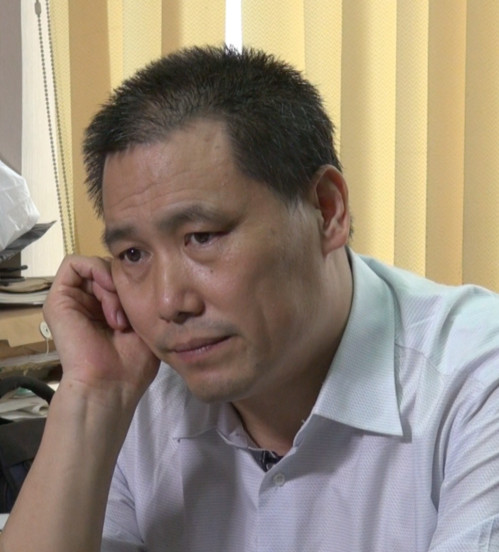
Pu Zhiqiang in 2013. Photo: Voice of America / Wikimedia Commons, public domain.

On January 1, 2019, Pu Zhiqiang posted on social media that at ten o’clock that morning, the Fengtai Xincun judicial office had declared his community correction at an end — his three-year suspended sentence had run its course. But the office also told him he would be subject to three more years of “continued assistance and education.” His journey — from one of China’s best-known rights lawyers to a man convicted over seven microblog posts, stripped of his licence and durably silenced — traces the shrinking space for speech in China.
Born in Luan County, Hebei, in 1965, Pu graduated in history from Nankai University and took a master’s degree in law at the China University of Political Science and Law. As a postgraduate in 1989 he joined the Tiananmen Square hunger strike, and for years afterwards he returned to the square every June 4 to keep a promise of remembrance. Licensed in the 1990s, he became an executive partner at Beijing’s Huayi Law Firm, specialising in press freedom and defamation cases: in 2004 he defended Chen Guidi and Wu Chuntao, authors of “A Survey of the Chinese Peasants,” and won a landmark defamation case for China Reform magazine; in 2009 he defended Tan Zuoren, prosecuted for investigating shoddy school buildings that collapsed in the Sichuan earthquake; in 2012 he represented artist Ai Weiwei’s company in its tax lawsuit and spoke out in the case of Tang Hui, a mother sent to a labour camp for petitioning. He was a prominent advocate for abolishing the “re-education through labour” system. In February 2013 he used his real name on Weibo to report Zhou Yongkang, then China’s security chief, calling for the “stability maintenance” system to be reckoned with and for rule of law and constitutional government.
On May 3, 2014, Pu attended a private seminar in Beijing marking the approaching 25th anniversary of the June 4 crackdown, alongside scholars, lawyers and members of the Tiananmen Mothers group. Late the next night, police took him from his home and searched it. He was criminally detained on May 6 for “picking quarrels and provoking trouble” and formally arrested on June 13 on that charge plus “illegally obtaining citizens’ personal information.” Investigators combed through his computers, notes and his firm’s accounts; in the end, the only “evidence” they could produce was words.
In May 2015, Beijing prosecutors indicted him for “inciting ethnic hatred” and “picking quarrels,” based on seven Weibo posts — some 600 characters in all, published between 2012 and 2014 — that mocked officials and criticised policy in Xinjiang. His trial opened at Beijing No. 2 Intermediate People’s Court on December 14, 2015; outside the court, foreign journalists, diplomats and supporters were manhandled by police and unidentified men. On the morning of the verdict, December 22, police detained at least a dozen supporters outside the courthouse.
The court sentenced Pu to three years in prison, suspended for three years. He said he would not appeal, and that afternoon he walked out of the detention centre that had held him for 19 months. Amnesty International called the conviction “a gross injustice,” aimed at silencing one of China’s bravest defenders of free expression. In April 2016 he confirmed to Reuters that the Beijing Justice Bureau had revoked his lawyer’s licence: after 19 months behind bars, he had lost his profession.
During his three years of probation he lived under community correction, reporting regularly to the judicial office, while his social media accounts were deleted as fast as he opened them. When the correction was lifted on January 1, 2019, he was promptly told he faced three years of “continued assistance.” Since then he has rarely spoken in public; around sensitive dates police call at his home with warnings, and his movements and meetings are watched. The price of those seven posts was a lawyer’s career — and long years of enforced silence.
Sources: Amnesty International, German Federal Foreign Office, National Public Radio.