
Gao Zhen case: Three-year sentence — the statutory maximum — for satirical sculptures made more than a decade ago
Issue: Freedom of Expression · Topic: Transnational Repression
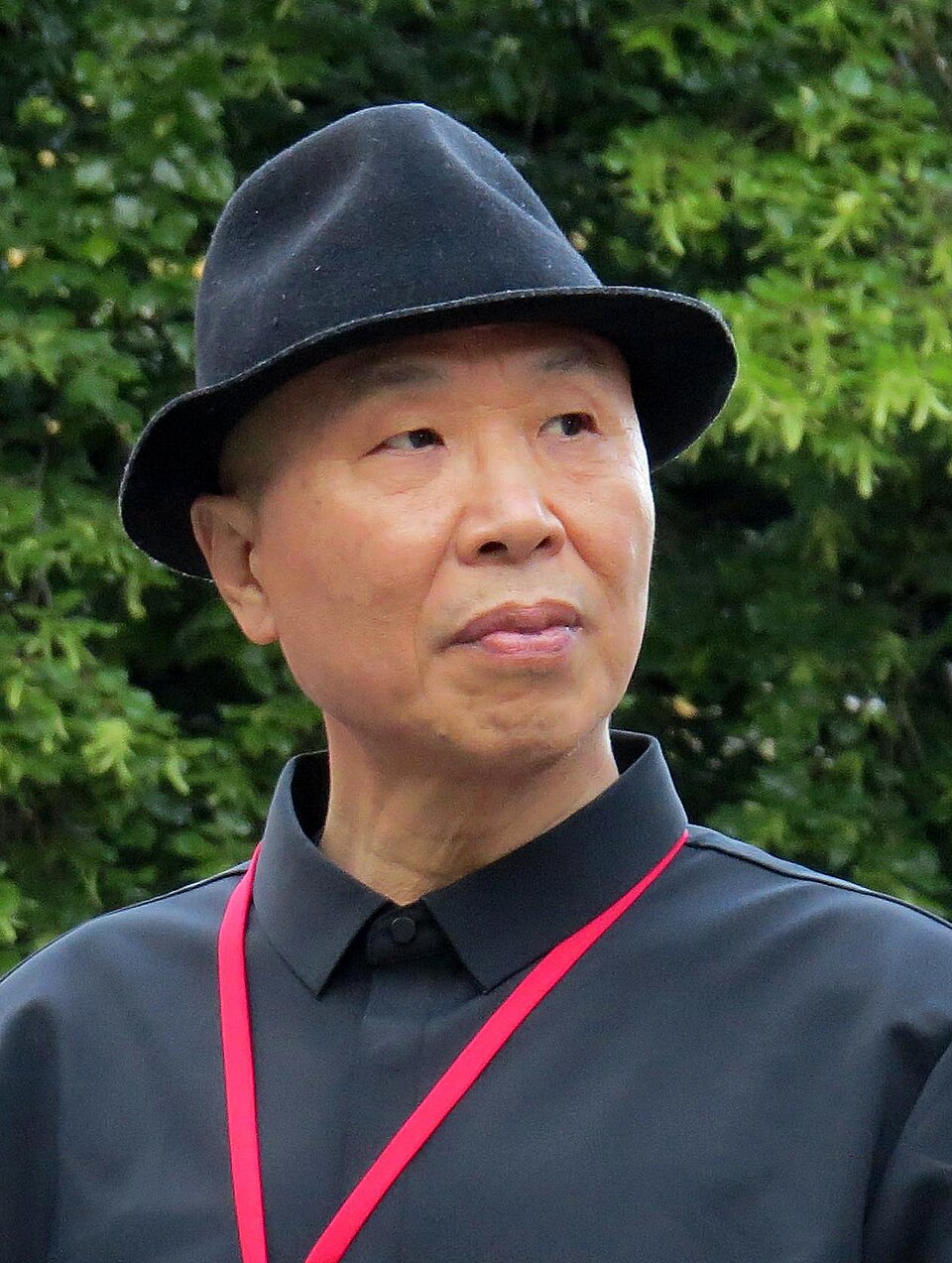
Gao Zhen attending the Oslo Freedom Forum in May 2019. Photo: Yupik, CC BY-SA 4.0, Wikimedia Commons.
On 25 August 2026, the Sanhe City People's Court in Hebei province sentenced sculptor Gao Zhen to three years in prison for infringing the reputation and honour of heroes and martyrs — the statutory maximum for the offence — with his term running to 25 August 2027. Gao has appealed; as of early November 2026, no second-instance ruling had been made public. Gao is a US-based artist who works with his younger brother Gao Qiang as the "Gao Brothers". The core conduct charged in the case is a series of satirical sculptures of Mao Zedong that Gao created between 2005 and 2009 — more than a decade before the offence was written into the Criminal Law.
Gao Zhen was born in Jinan, Shandong, in 1956. According to multiple art-media reports, his father was labelled a "class enemy" during the Cultural Revolution, imprisoned, and died in custody. From 1985, Gao Zhen and Gao Qiang worked together as the Gao Brothers; they came to prominence in 1989 with an installation at the China Avant-Garde Exhibition at the National Art Museum of China, and in 2003 opened a studio in Beijing's 798 Art District. The Gao Brothers obtained US permanent residency in 2011; in 2022, Gao Zhen moved to New York with his wife and child.
According to the facts found in the first-instance judgment, between 2005 and 2009 Gao created three series of sculptures in his 798 studio, including "Repentance" (忏悔) and works such as Execution of Christ, depicting seven Mao figures aiming guns at Christ; The Mao Who Kneels in Repentance (also known as Mao's Crime), depicting Mao kneeling in repentance; and the Miss Mao series, which feminised Mao's image. In addition to the act of creation, the prosecution also charged his continued dissemination of related content on the X platform between 2013 and 2024, and his authorising the use of the works on a book cover. The case is therefore not solely about works made more than a decade ago; continued dissemination also forms part of the charges. This site sets out both, in line with the judgment and the indictment.
In June 2024, Gao returned to China to visit family with his wife Zhao Yaliang and their young son. On 26 August, about 30 police officers searched his studio in Yanjiao, Sanhe, Hebei, and Gao was criminally detained by the Sanhe Public Security Bureau on suspicion of infringing the reputation and honour of heroes and martyrs; police photographed and seized his sculptures and sealed the studio. In late August to early September 2024, when Zhao Yaliang attempted to fly back to New York from Beijing airport with their son, border officials stopped her from leaving on "national security" grounds; their son is a US citizen but, being too young to travel alone, was effectively stranded in China and unable to start school in New York. On 29 September, Gao was formally arrested and held at the Sanhe detention centre. The case drew support from the international art world: a global petition initiated by the exiled writer Ma Jian gathered signatures from nearly 200 writers and artists, while a separate petition by 181 figures in China's cultural circles called for his release (the two figures relate to different petitions and are attributed separately); Amnesty International issued repeated urgent actions, and the Dui Hua Foundation issued a statement on the exit ban imposed on his son.
On 10 June 2025, the Sanhe City People's Procuratorate filed the prosecution, recommending a three-year sentence. On 30 March 2026, the Sanhe City People's Court heard the case behind closed doors on grounds of "personal privacy"; family members and observers from the European Union and the United States were refused admission, and defence lawyers Mo Shaoping and Ma Gangquan appeared for Gao. Gao denied the charges, arguing that the sculptures' prototypes were not a former state leader and that he had neither distorted nor vilified anyone; in his final statement he pointed out that the works in question were created between 2005 and 2009, that the offence was added to the Criminal Law years after their creation, and he questioned the retroactive application of the law, maintaining that the works were legitimate artistic expression. On 15 April 2026, a spokesperson for the UN Office of the High Commissioner for Human Rights issued a statement expressing concern about the trial, noting that the case involved retroactive application of criminal law and the use of criminal sanctions to punish artistic expression. On 25 August, the court handed down the sentence described above.
The family has made a number of further claims — including their son's age, the number of works seized, petition signature counts and Gao's treatment in detention — but the various sources differ on these points or they rest on the family as a single source, and this site does not reproduce them. The facts in this article are based on the first-instance judgment, the indictment, and reporting by two or more independent sources. In its third urgent action, Amnesty International said that on the day after sentencing Gao vomited blood several times and was taken to hospital for examination; this detail is reported as cited by that organisation, and this site attributes it as such.
Sources: Amnesty International statement of 26 August 2026 on Gao Zhen receiving the maximum sentence; Amnesty International third urgent action (UA 106/24, ASA 17/1527/2026); UN Office of the High Commissioner for Human Rights statement of 15 April 2026; first-instance judgment of the Sanhe City People's Court, Hebei (circulated through public channels and cited by multiple organisations); Voice of America report of 4 September 2024 on Gao's detention and the exit ban on his wife and son; Dui Hua Foundation statement of 7 August 2025 on the exit ban imposed on Gao's son.